
Peachland history at a glance
The land around Peachland is the traditional, ancestral and unceded territory of the Syilx (Okanagan) people. The Okanagan Nation Alliance speaks for the Syilx today. The history of this shore did not begin with European settlers.
The town as visitors know it grew from fruit growing. A town plan with 10-acre lots for orchards dates from 1898, and the District of Peachland was incorporated on 1 January 1909. Two historic buildings survive on Beach Avenue: a church from 1910 that is now the museum, and a schoolhouse that houses an art gallery.
Syilx land and water
The history before the town.
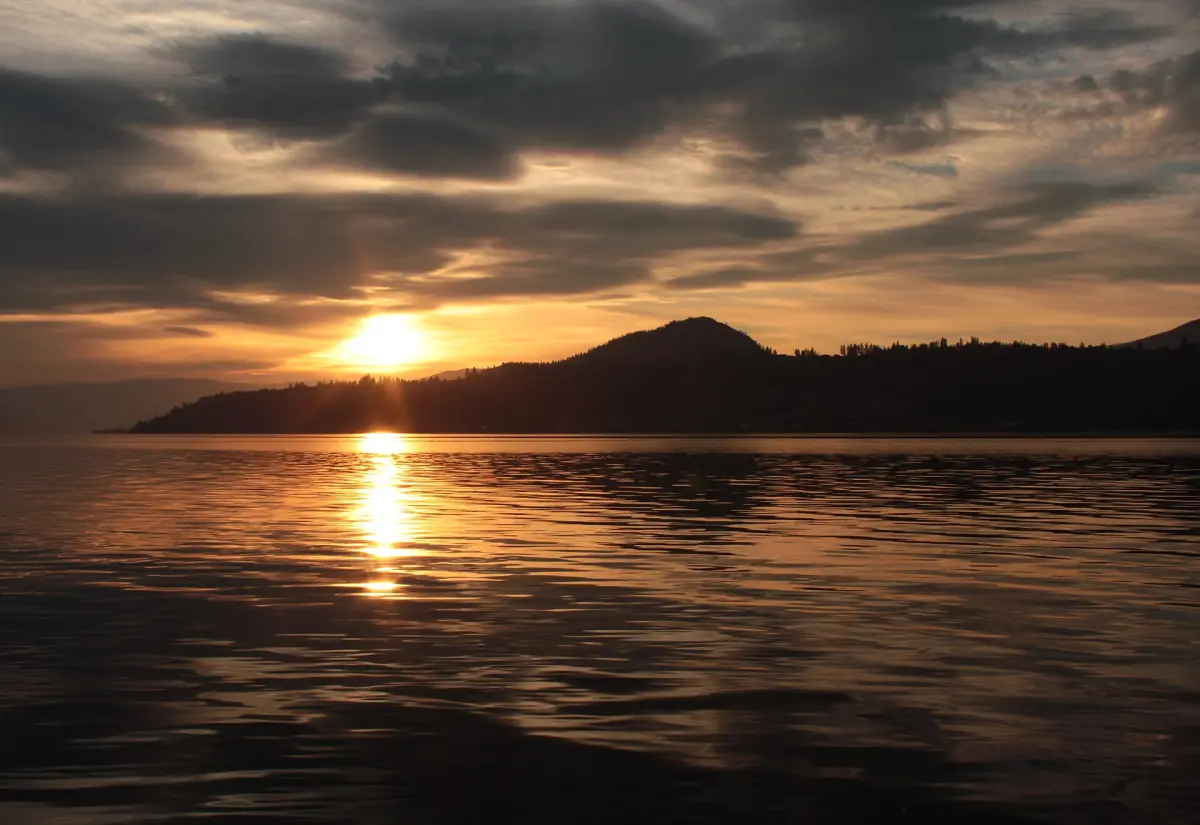
The Syilx are the Indigenous people of the Okanagan, and their territory has never been ceded. Their teachings describe n̓x̌aʔx̌ʔítkʷ, a sacred being in the water, the spirit of the lake. Outsiders use the name Ogopogo for a legend. The Syilx teaching is not a tourist monster, and nobody can promise a sighting. More on the lake itself is on the Okanagan Lake page.
Peachland and Okanagan tours
Day trips, tastings and lake outings from Peachland and Kelowna, with live prices and availability.
From orchards to a town
The settlement story in short.
1898: the town plan
J. M. Robinson laid out the town in 1898 with 10-acre lots meant for orchards. The historic schoolhouse and the post office also date from 1898.
Winter timber, summer fruit
Early settlers combined winter work in the woods with fruit growing in summer, and peaches were part of the early orchards. Peach orchards do not cover the town today, and there is no promise of a harvest or a pick-your-own season.
1 January 1909: a District
Peachland became a District municipality. Do not confuse this date with the town plan of 1898.
Buildings you can visit
Two houses, two sets of hours.
The museum is the octagonal former Baptist church at 5890 Beach Avenue. It was built in 1910, served as a church until 1964 and has been a museum since 1980. The collection documents local history. The visitor centre is in the same building. Admission is by donation. It is open Tuesday to Sunday, 10 a.m. to 4 p.m., and closed on Monday, with longer summer days from July to September, 10 a.m. to 6 p.m. Check the hours before you go. The ground floor is accessible, so do not count on the upper floor.
The gallery is a different building, the historic schoolhouse at 5684 Beach Avenue. It is open Wednesday to Sunday, 10 a.m. to 4 p.m., closed Monday and Tuesday, and works by donation. In July and August hours can be longer, daily 9 a.m. to 5 p.m., and admission can be free. Hours differ by season, so check ahead if your plan depends on it.
| Building | Address | Typical days |
|---|---|---|
| Museum and visitor centre | 5890 Beach Avenue | Tuesday to Sunday, 10 a.m. to 4 p.m.; longer in summer |
| Art gallery in the schoolhouse | 5684 Beach Avenue | Wednesday to Sunday, 10 a.m. to 4 p.m.; daily in July and August |
For most visitors, one hour for the museum and a short stop at the schoolhouse fits a morning, followed by the waterfront.
More to explore
Pages that continue the story.


Peachland history: frequently asked questions
Who lived here before the town?
The Syilx (Okanagan) people. The land is their traditional, ancestral and unceded territory.
When was Peachland founded?
The town plan dates from 1898, and the District was incorporated on 1 January 1909. There is no single founding date that covers both.
Is the museum the old schoolhouse?
No. The museum is the 1910 Baptist church. The art gallery is in the historic schoolhouse.
Is Ogopogo the same as the Syilx lake teaching?
Ogopogo is a legend with a name used by outsiders. The Syilx speak of n̓x̌aʔx̌ʔítkʷ, a sacred being in the water, which is a teaching and not the same thing. Treat it with respect.
Are there peach orchards in Peachland today?
Peaches were part of the early orchards. Do not expect orchards everywhere in town, and check locally for any seasonal fruit.